
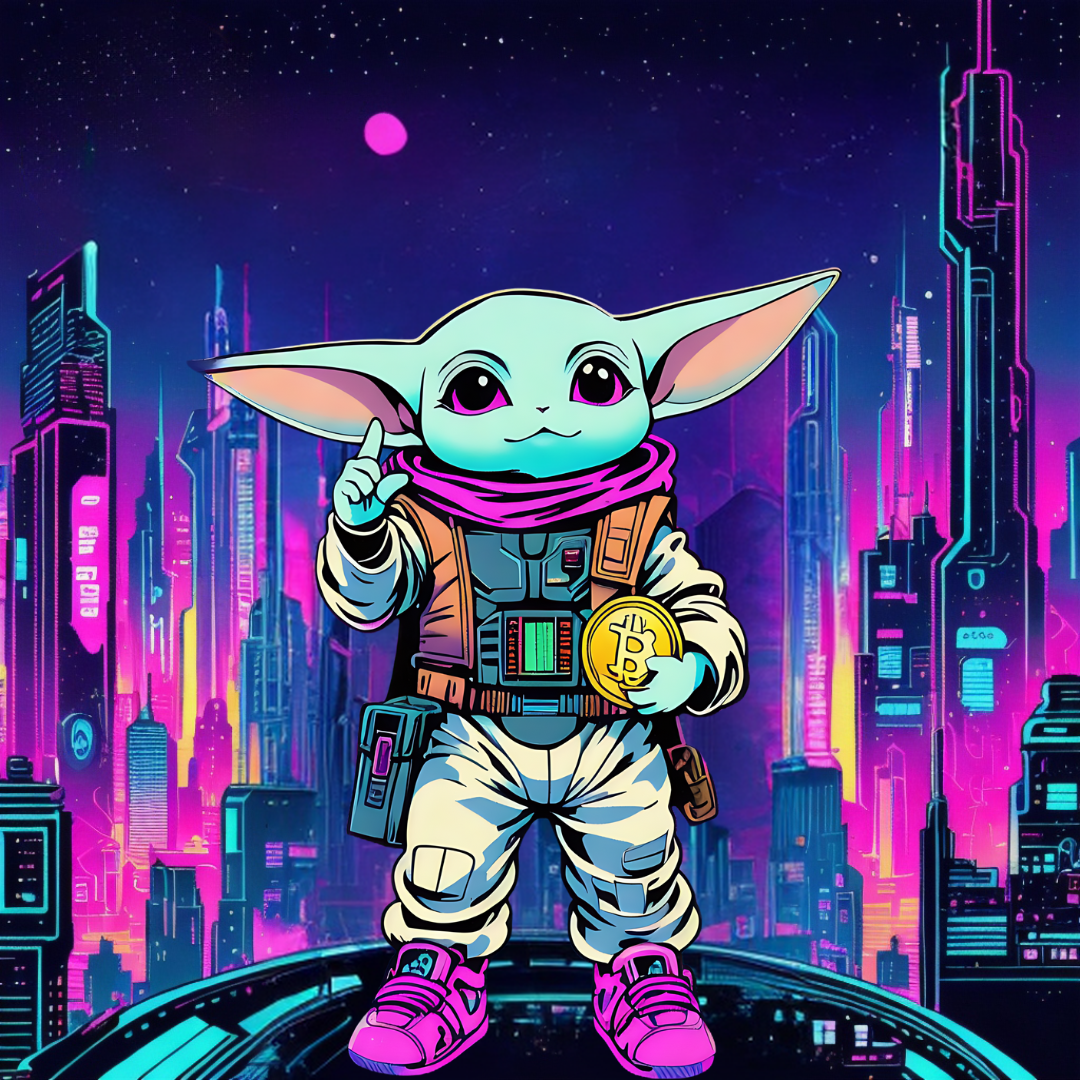
Roadmap 2026: The Technical Evolution of $GRO
In 2026, the $GRO / GROWORLD ecosystem transitions from a concept- and community-driven growth phase to the formation of a full-scale Web3 infrastructure. The primary focus shifts toward scalability, cross-chain interoperability, sustainable liquidity, and extensible DeFi mechanics.
The 2026 roadmap defines the core architectural layers of the ecosystem:
social (clans), financial (DeFi), infrastructure (bridges, DEX, CEX), and the Bitcoin layer (Stacks).
Clan System as a Social Protocol
The clan system within Telegram is designed not as a gamification feature, but as a social protocol layer. Each clan operates as an autonomous P2P group with its own interaction rules and economic incentives.
Key technical components:
- participant roles linked to NFT avatars;
- P2P interaction mechanics;
- $GRO farming on the TON network;
- on-chain reward distribution logic;
- extensible NFT functionality (access rights, limits, yield multipliers).
This approach creates a modular growth architecture, where activity and load are distributed across multiple independent community nodes.
$GRO DeFi Staking on Arbitrum: Modular Architecture
In 2026, $GRO DeFi staking on Arbitrum evolves into a multi-layer financial system:
- base $GRO staking;
- integration of wBTC and DAI;
- groundwork for Bitcoin DeFi mechanics;
- combined staking and automated yield compounding;
- an upgraded personal dashboard with on-chain metrics and analytics.
Arbitrum is selected for its low transaction costs, high throughput, and mature DeFi ecosystem.
Cross-Chain Bridge: TON → Arbitrum
A phased rollout of an automated cross-chain bridge will enable $GRO transfers from TON to Arbitrum via swap-based mechanisms.
Bridge objectives:
- liquidity synchronization across networks;
- access for TON users to Arbitrum DeFi;
- reduction of token liquidity fragmentation;
- increased capital efficiency across the ecosystem.
This cross-chain architecture allows $GRO to scale without dependency on a single blockchain.
Concentrated Liquidity on DEXs
To improve capital efficiency in 2026, concentrated liquidity models will be deployed on decentralized exchanges:
Camelot, Uniswap, and TONCO.
Technical focus areas:
- narrow price ranges for liquidity providers;
- increased market depth;
- reduced slippage;
- more efficient automated market-making strategies.
This layer is critical for stabilizing $GRO market dynamics.
Web3 Integration and CEX Infrastructure
The 2026 roadmap includes Web3 integration with Bitget, along with listings on Bitmart and ProBit.
From a technical perspective, this involves:
- on-chain deposits and withdrawals;
- integration with centralized exchange APIs;
- increased trading volume and liquidity;
- streamlined user onboarding between Web2 and Web3 environments.
Bitcoin L2 Stacks: Expansion into Bitcoin DeFi
Preparation for integration with Bitcoin L2 Stacks introduces a dedicated Bitcoin layer within the $GRO ecosystem, focused on BTC DeFi and NFT infrastructure.
Planned directions:
- $GRO utilization within Stacks-based DeFi protocols;
- NFT integrations aligned with Bitcoin-native assets;
- expansion of $GRO utility within the Bitcoin economy;
- bridging Web3 programmability with Bitcoin’s security model.
Stacks acts as a connective layer between Ethereum-based DeFi and the Bitcoin network.
Architectural Summary of Roadmap 2026
The 2026 roadmap positions $GRO as a multi-layer Web3 protocol:
- Social layer — clans and NFT-based identity;
- Financial layer — DeFi staking and farming;
- Infrastructure layer — bridges, DEXs, and CEXs;
- Bitcoin layer — Stacks and Bitcoin DeFi.
$GRO remains a token backed by community belief —
but that belief is expressed through code, protocols, and infrastructure.